

 EN
As urban sprawl accelerates and commercial developments push further into suburban neighborhoods, EPC contractors face a recurring logistical nightmare. You need to deliver massive amounts of medium-voltage power to a new facility, but you are not allowed to create a public hazard or an architectural eyesore to do it.
Decades ago, deploying a localized grid node meant erecting a vulnerable pole mounted substation or building a sprawling, chain-link-fenced switchyard. Today, municipal zoning boards and safety inspectors will rarely approve either of those options for commercial centers, hospitals, or residential parks.
The industry standard has permanently shifted. For safe, compact, and aesthetic outdoor power distribution, the pad mount substation is the undisputed solution.
As a veteran manufacturer of heavy-duty utility equipment, we spend a lot of time helping civil developers and grid planners transition to this technology. If you are planning an outdoor distribution network, here is a deep dive into the engineering, safety, and economic benefits of specifying a pad mount substation.
When you place electrical infrastructure in an area accessible to the general public—like the edge of a shopping mall parking lot or a university campus—safety is your absolute highest liability.
Traditional fenced-in substations have exposed high-voltage bushings and live overhead busbars. If a curious teenager or a copper thief breaches the fence, the results are fatal. Similarly, a pole mounted substation is highly vulnerable to severe weather, falling branches, and vehicle collisions, which can bring live wires crashing down onto the street.
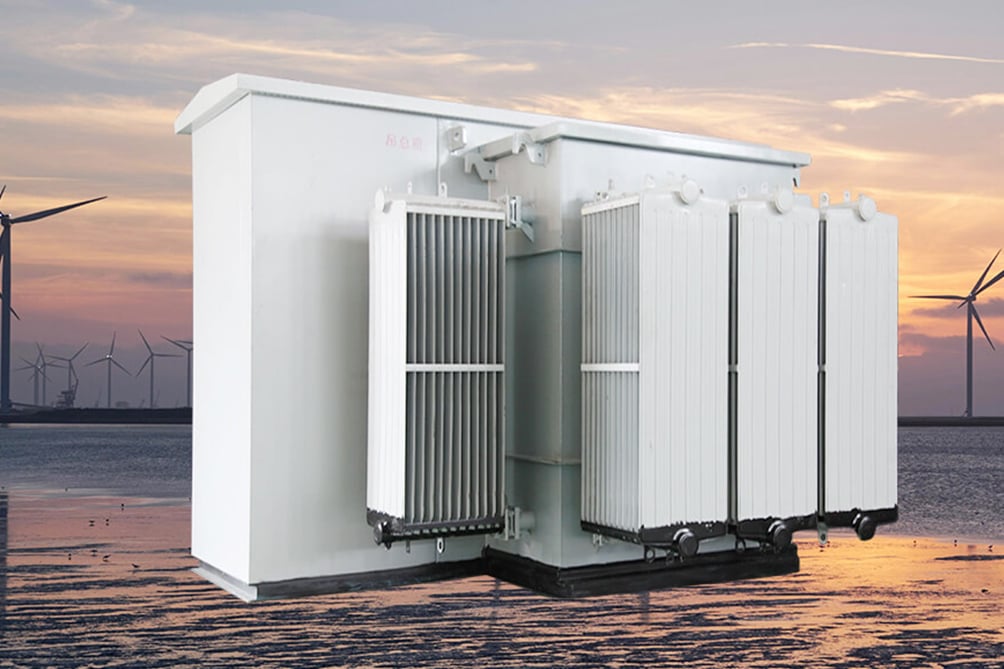
A modern pad mount substation completely eliminates these risks through "dead-front" engineering. In a dead-front design, all medium-voltage and low-voltage cables are entirely concealed and routed underground. When you stand in front of a pad mount substation, there are no exposed wires, no live terminals, and no open cooling fins. The internal components (the switchgear, the transformer, and the LV distribution board) are locked securely inside a heavily grounded, tamper-proof steel or aluminum enclosure.
Even if a pedestrian leans against the exterior cabinet of the pad mount substation, they are completely safe. This inherent, locked-down safety profile is why city inspectors green-light these units faster than any other distribution topology.
Let’s face it: electrical infrastructure is rarely pretty. When architects design a multi-million-dollar corporate campus, the last thing they want is a massive, industrial eyesore ruining the landscaping.
Because a pad mount substation is highly compact and low-profile, it is the architect's best friend. These units are typically painted in standard "Munsell Green," allowing them to blend seamlessly into hedges, lawns, and outdoor landscaping.
More importantly, utilizing an outdoor pad mounted transformer forces the site to use underground cable trenching rather than overhead lines. Burying the power lines not only beautifies the skyline but drastically reduces weather-related outages.
One of the most misunderstood aspects of B2B electrical procurement is the total cost of installation. Buyers often look at the hardware cost of a pad mount substation and assume it is more expensive than building a traditional open-air yard.
However, when you calculate the civil engineering requirements, the financial math heavily favors the compact unit.
|
Installation Parameter |
Traditional Fenced Switchyard |
Packaged Pad Mount Substation |
|
Land Footprint |
400 to 600+ sq. ft. |
50 to 100 sq. ft. |
|
Civil Works Required |
Deep trenching, gravel yards, grounding grids, chain-link security fencing. |
A single, flat, pre-cast concrete plinth (pad). |
|
On-Site Assembly |
4 to 8 Weeks (Connecting separate switchgear and transformers). |
2 to 4 Days (Arrives fully pre-wired from the factory). |
|
Security Costs |
High (Requires perimeter alarms and cameras). |
Low (Self-contained, tamper-proof locks). |
Because the pad mount substation arrives from our manufacturing facility fully assembled, tested, and pre-wired, your on-site labor costs are slashed to a fraction of a traditional build. The contractor simply lifts it off the flatbed truck, bolts it to the concrete pad, pulls the underground cables up through the base, and terminates the connections.
Just because a pad mount substation is compact does not mean it lacks power. Modern engineering allows us to package massive capacities into relatively small footprints.
For instance, a standard fast-food restaurant might only require a 300kVA unit. But if you are powering a massive data center's cooling array or a regional hospital wing, you can easily specify a 1000 kva pad mounted transformer or even a 2500kVA unit.
These high-capacity pad mounted distribution transformers are engineered with advanced dielectric fluids (such as high-flashpoint ester oils) and sophisticated internal cooling channels. This ensures that even when sitting directly in the blazing summer sun, the pad mount substation can operate at 100% continuous load without thermal tripping.
When you place critical infrastructure outdoors, you are fighting a constant war against water, dust, and corrosion.
A premium pad mount substation is built to NEMA 3R or IP54/IP55 standards. The enclosure roofs are sloped to shed torrential rain and snow, while the ventilation louvers are baffled to prevent wind-blown dust and insects from entering the high-voltage compartments.
Furthermore, as a trusted manufacturer, we utilize advanced powder-coating processes and galvanized steel bases to ensure that the bottom of the pad mount substation does not rust when exposed to standing water or winter road salts.
The era of sprawling, dangerous, and ugly outdoor electrical yards is coming to an end.
Whether you are expanding a suburban housing tract, building a green-energy charging depot, or upgrading an industrial park, the pad mount substation offers the perfect balance of aesthetic subtlety, public safety, and brute electrical force.
When you specify a pad mount substation directly from a reputable, vertically integrated manufacturer, you aren't just buying hardware. You are buying a pre-tested, plug-and-play solution that accelerates your project timeline, slashes your civil engineering costs, and keeps the public completely safe.